



Въездные стеллажи (коридорные / проездные стеллажи)
Въездные стеллажи (их также называют коридорными или проездными) используют паллетный способ доступа и предназначены для хранения больших объёмов товаров с малой номенклатурой. Так как погрузчику необходимо заезжать внутрь стеллажа для работы с грузом, обычно советуют, чтобы глубина выборки с одной стороны не превышала 5 мест под паллеты.
Вместимость въездных стеллажей на той же площади почти вдвое превышает вместимость обычных селективных паллетных стеллажей: проходы между рядами исключаются, а коридоры объединяются, благодаря чему паллеты в одном коридоре и на одном уровне хранятся подряд. Это позволяет максимально задействовать полезный объём. Въездные стеллажи активно используют для хранения крупносерийных партий товаров с небольшой номенклатурой. Как правило, такая продукция имеет единообразную упаковку и единую спецификацию — например, на складах пищевых производств, табачной отрасли, в холодильном хранении и т. п.
Элементы конструкции
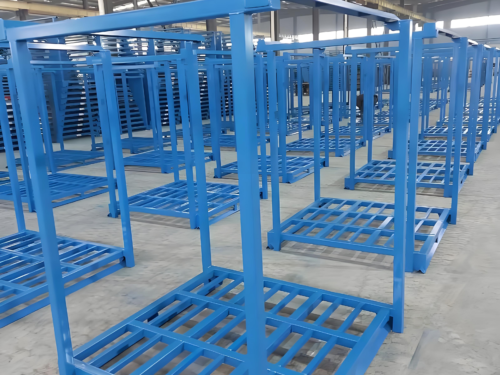
Стойка (колонна). Две колонны соединяются между собой поперечными связями и диагональными раскосами с помощью нейлоновых самоконтрящихся болтов — это эффективно предотвращает потерю устойчивости стеллажа. На колоннах выполнены двойные ряды ромбовидных отверстий с шагом 75 мм — они служат для крепления несущих направляющих. Высоту направляющих можно регулировать с шагом 75 мм, перемещая их вверх или вниз по колонне.
Несущие направляющие (верхние и задние балки). Свариваются из двух крепёжных элементов колонны и прямоугольных труб. Конструкция отличается простотой и надёжностью, малым весом, способностью выдерживать растягивающие и сжимающие нагрузки, а также невысокой стоимостью. При креплении соединителя к колонне используется специальный предохранительный штифт — он гарантирует, что направляющая не соскочит после внешнего удара.
(Примечание: в стандартных въездных стеллажах нет сплошных задних балок — роль несущей конструкции выполняют направляющие, протяжённые на всю глубину коридора.)
Защитные элементы стоек («бычьи ноги» / отбойники). Это цельноштампованные детали, возможна версия со сварными элементами. Обладают большим моментом инерции, высокой несущей способностью и аккуратным внешним видом. Крепление к колонне осуществляется специальным предохранительным штифтом — это защищает конструкцию направляющих от ударов погрузчика.
Направляющие для поддержки паллет (полки). Изготавливаются из холоднокатаного проката; длину можно выполнить любой по требованию — без стыков. Конструкция однородная, распределение нагрузки — равномерное.
(Примечание: во въездных стеллажах речь идёт именно о несущих направляющих, поддерживающих края паллет, а не о сплошном настиле полок.)
Ключевые размеры, которые важно учитывать при проектировании въездных стеллажей
При расчёте въездных стеллажей особое внимание уделяют следующим параметрам:
- A — длина стеллажа (размер между центрами колонн);
- B — внутренний просвет между колоннами или защитными отбойниками (важно: в этот зазор должна свободно помещаться ширина погрузчика);
- C — ширина стеллажа (габаритные размеры по колоннам);
- D — длина паллет и вил (определяют необходимую глубину направляющих);
- E — внутренний просвет между несущими направляющими (важно: верхняя часть погрузчика должна свободно проходить в этом зазоре);
- F — габариты груза на паллете (влияют на несущую способность и безопасность);
- G — шаг колонн (обычно принимается равным ширине паллет);
- H — высота стеллажа (учитываются высота паллет, высота груза, запас для подъёма и т. д.).


Отзывы
Отзывов пока нет.